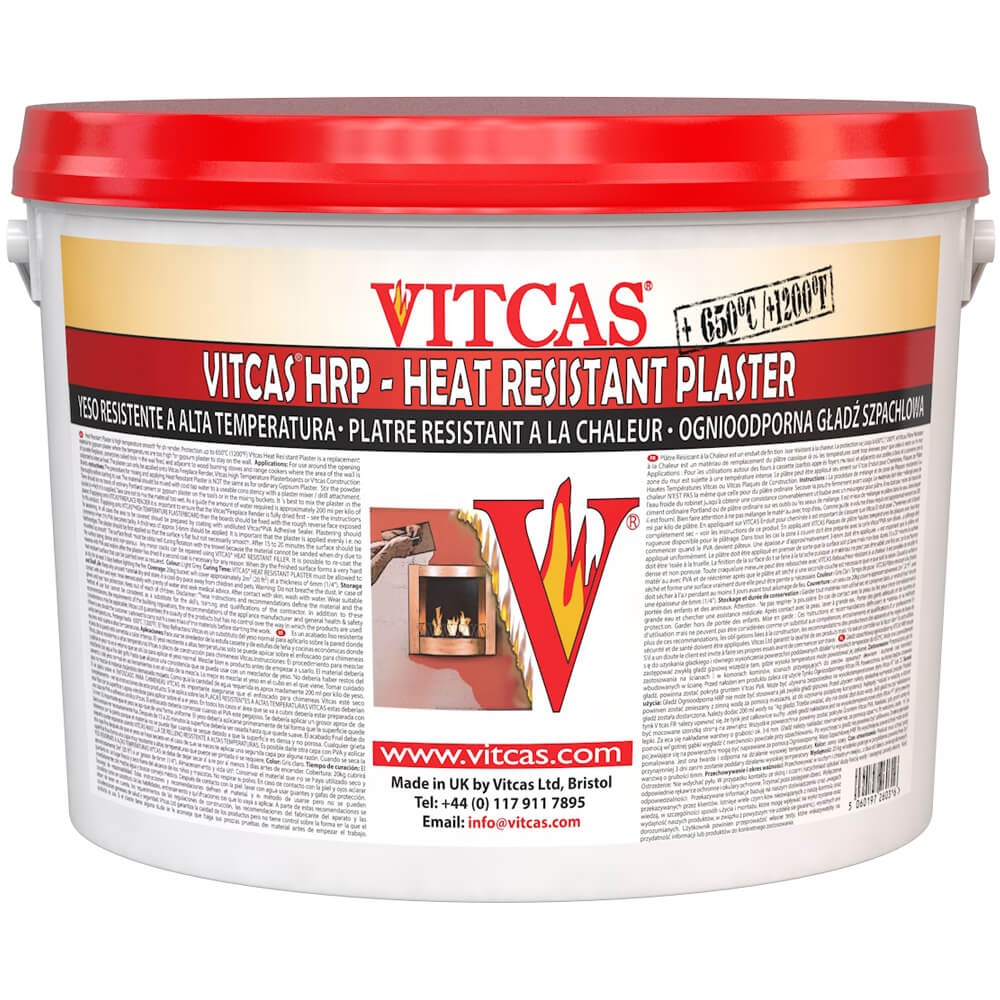
A smooth finish around the fireplace insert requires appropriate material and a prepared layer underneath. Vitcas Heat Resistant Plaster is recommended for such applications. Before work, check the entire setup so that the thin plaster does not cover damage or unevenness that needs to be addressed beforehand.
Check the documented HR scope
Heat Resistant Plaster has a declared resistance up to 650°C and creates a smooth surface on the specified substrates. The instruction provides for a layer of 3–6 mm. The selection also takes into account the location, condition of the substrate, and the requirements of the specific insert.
Mark the work surface and indicate the required installation openings. The finish should not impede operation or cover the spaces specified in the device installation. Changing the wall appearance must maintain the functions of the entire system.
Prepare the appropriate layer under the plaster
Fireplace Render can serve as the specified base coat on masonry. It must be properly prepared for further work. For a larger defect, restore the appropriate layer instead of trying to fill the entire depth with a thicker HR.
On HT Fireboard check the specified face of the sheet and preparation requirements. Maintain the priming described for the product. Loose dust or coating peeling from the surface must be removed before work according to the system instructions.
Smoothness should be achieved on a fresh layer
Prepare clean tools, water, and an amount of material corresponding to the planned surface. HR is smoothed by proper trowelling. Do not plan ordinary sanding of a dry layer as a way to correct an entire uneven wall.
Maintain the required drying and preparation to temperature before using the fireplace and further decoration. Record the substrate, products, and dates. If the surface changes later, it will be easier to distinguish a plaster problem from movement or moisture deeper in the construction.