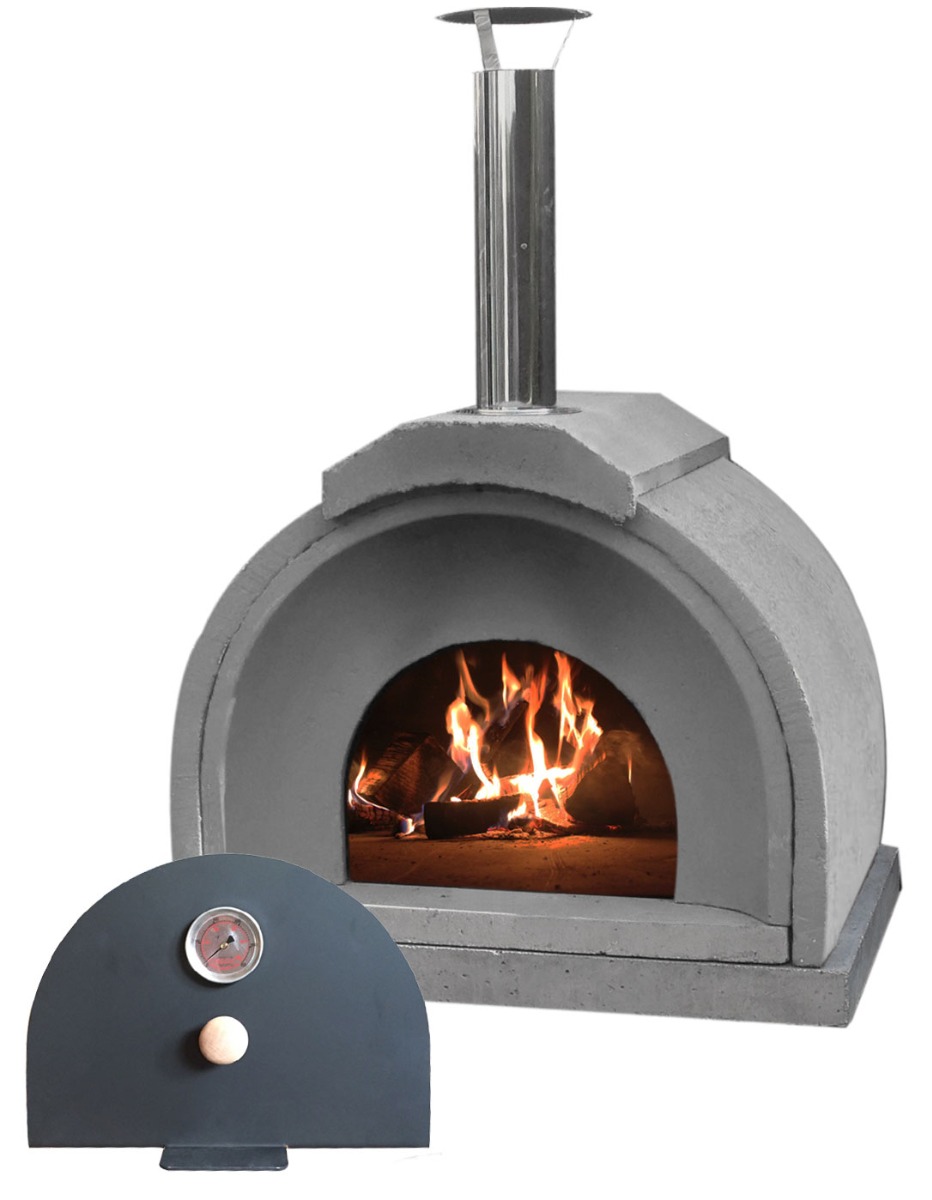
A small opening and compact chamber may fit the available space, but do not confirm the suitability of the location. This is especially true for balconies and covered areas. Start choosing the oven based on location conditions, and only later on matching its outline.
Match oven data to the location
Vitcas Casa is an outdoor oven intended for exterior use. The datasheet lists a weight of 150 kg, not including any base or additional finishing. When assessing the location, consider the complete setup and the method of load transfer.
The requirements for a balcony or other structure must be determined for the specific solution. Do not interpret the term compact as a load-bearing value. Dividing the oven into parts helps with assembly, but the finished set still puts a load on the placement area.
Plan a cross-section under the chamber
Ceramic fibre board can provide insulation in a compatible, properly supported configuration. It is not a standalone confirmation of the suitability of the balcony slab, frame, or an arbitrary furniture board. Record the insulating layer and the load-bearing structure separately.
Compare the oven installation requirements with the execution plan. Also mark access to the entrance and the path for tool operation. The space accommodating just the chamber may turn out to be too tight to handle the equipment.
Evaluate the conditions from all sides
Check the surroundings of hot parts, exhaust venting, and device requirements. The roof and glazing change the description of the location. Just because the oven is for outdoor use does not automatically confirm its usability on any balcony.
Also take the transport path into account before ordering components. If the location does not meet requirements, modify the design or choose a different placement. Adding extra insulation after purchase does not solve previously unassessed load-bearing capacity or operational conditions of the complete device.