A small crack in a finishing coat and a gap caused by movement in the surround can look similar. Before choosing a filler, identify what has cracked: the plaster finish, a board joint or an area beside the fireplace insert frame. The repair material must suit the substrate and the joint's function, rather than simply cover the mark.
Check whether the crack changes
Photograph the cold surround with a ruler and record the crack's location. Compare earlier photographs if available. A crack that returns after heating may indicate joint movement, inadequate support or a problem with the layer arrangement.
Do not rigidly fill a gap designed to accommodate expansion. A loose panel, bulging surface or discolouration needs investigation before cosmetic repair.
Where is Heat Resistant Filler suitable?
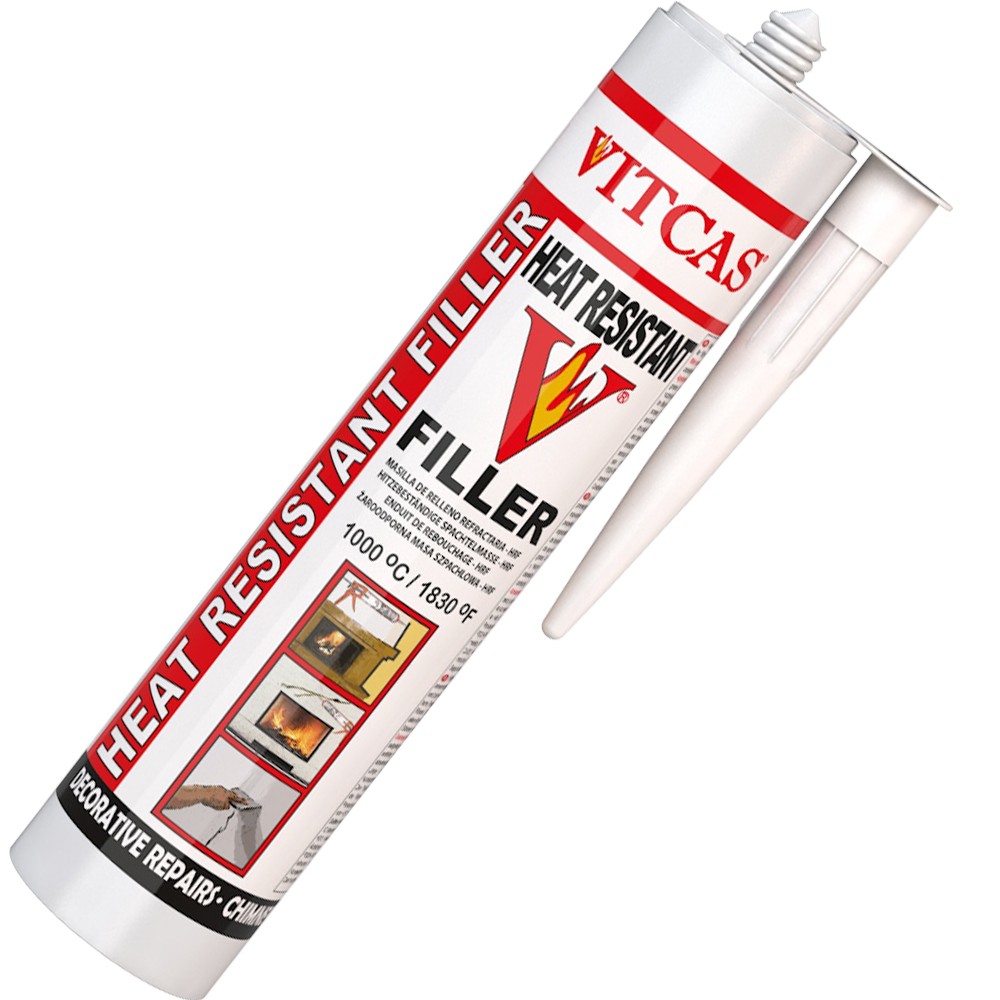
Vitcas HRF Heat Resistant Filler is intended for small cracks, joints and surface imperfections in compatible fireplace and stove applications. The manufacturer lists use with HT fireboards and HRP finishing plaster. HRF's stated resistance up to 1000°C does not increase the temperature limits of the other surround layers.
A local defect in a stable, compatible finishing layer may be an appropriate repair. Rebuilding a damaged firebox lining or sealing a flue connection is a different task; the filler should not be treated as a substitute for either.
Preparing a small repair
Remove loose material and check that sound substrate remains underneath. Clean away dust and contamination. Apply and smooth the filler as instructed, then wait until it has set before sanding or adding the next finish.
Before heating again, meet the drying requirements for the complete set of materials used. Keep a photograph of the completed repair. If the crack returns along the same line, investigate movement in the surround instead of adding another layer of filler.